01 Gaussian splats, native to Unreal Engine

Unreal Engine 5
WallGS.

Render, animate, optimize and interact with Gaussian splats inside Unreal Engine.

Supports Unreal Engine5.3–5.8

One renderer from desktop to Android and VR—with the tools needed to turn scans into production scenes.

/ Choose your edition

WallGSvsWallGS Pro

Feature compatibility comparison

Feature

WallGS

Get it on Fab

WallGS Pro

Get it on Fab
3DGS RenderingYesYes
4DGS SupportYesYes
PLY & SOG SupportYesYes
Windows / PCVRYesYes
Android / Meta QuestYesYes
LOD ControlsYesYes
Collision SupportYesYes
Relighting ExperimentalNoYes
Screen-Traced Lumen ReflectionsNoYes
Advanced Runtime Import & ViewerNoYes
Advanced 4DGS ControlsNoYes
Culling VolumesNoYes
Stochastic RenderingNoYes

Features

01

Relighting.
Captured, then relit.

Experimental. Relight static 3D and animated 4D Gaussian splats with automatic normals. Blend captured light with Unreal lighting, or use a proxy mesh for static splats with optional shadow casting.
02

Inside Lumen
reflections.

WallGS splats appear in Lumen’s screen-traced reflections. Reflected environments retain their Gaussian detail across glossy Unreal surfaces in real time.

03

4DGS.
Scenes that move.

Play time-varying Gaussian captures as native sequence assets. Control timing, looping and playback in Unreal while WallGS streams and prefetches the frames around the moment on screen.

04

Android.
Full scene, untethered.

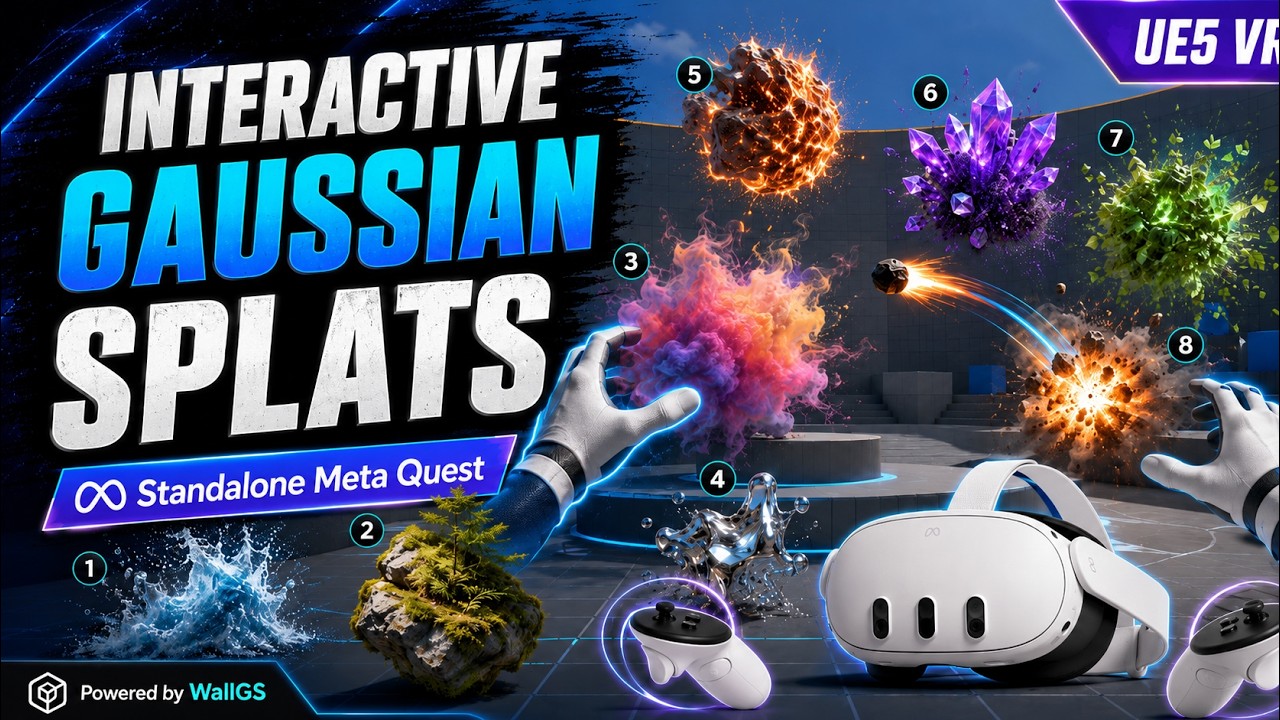
A dedicated Vulkan mobile path brings Gaussian splats to Android phones and standalone Meta Quest. Mobile Multi-View and device-aware splat budgets keep the workload built for the hardware.

05

One-click
collision.

Generate collision directly from a splat asset. The scan stays visually Gaussian while Unreal gets usable geometry for blocking, traces, placement and physics.

06

Automatic LOD.
Control when needed.

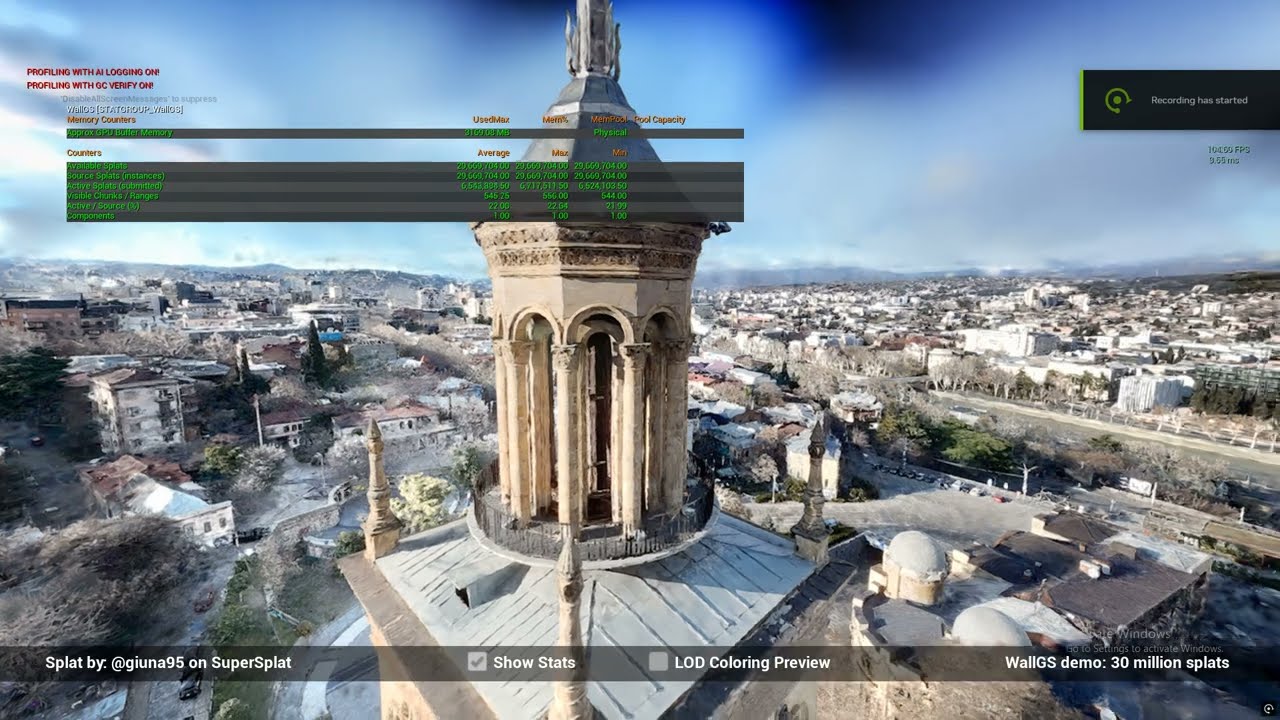
WallGS builds a spatial LOD hierarchy automatically. At runtime, off-screen clusters are rejected before exact GPU depth sorting and distant density falls while nearby detail stays intact.

Preset profilesChoose quality levels in editor or at runtime.
LOD color previewSee spatial transitions directly in the scene.
stat wallgsRead useful renderer statistics live.
Smarter GPU workCluster culling, temporal reuse and visible sorting.
07

Depth of field.
Keep the focus.

Gaussian splats resolve through Unreal’s depth-of-field pipeline, placing scanned subjects naturally inside cinematic focus.

08

PC VR.
Native stereo.

Instanced Stereo, shared stereo sorting and VR-specific controls keep splat scenes responsive across both eyes.

Shared stereo workload2 EYES
09

DLSS
support.

Use NVIDIA DLSS with WallGS rendering to recover performance while preserving a stable, detailed final frame.

10

Runtime
import.

Load Gaussian splat files while the application is running through Blueprint-callable paths. Use standard binary .PLY or compact .SOG v2 in the same native renderer.

WALLGS / RUNTIMELoad Gaussian Splat_
PLY
.PLYStandard interchange
✓
SOG
.SOGCompact splat scenes
✓
11

Instance freely.
Share the weight.

Multiple copies of the same asset reuse shared render data instead of duplicating the full payload. Repeated scenes stay far lighter than repeated imports.

12

Culling volumes.
Keep what matters.

Shape scans with adjustable, rotatable volumes. Hide Inside removes unwanted regions; Keep Inside isolates selected areas. Control cuts at runtime through Blueprints, or bake them into the asset permanently.

/ FREE PUBLIC DEMOS

Try WallGS
for yourself.

Download a build for Windows PC or standalone Meta Quest.

/ IMPORT BENCHMARKS

Measured scenes.
Visible difference.

WallGS prepares large assets quickly and keeps their Unreal footprint compact. NanoGS time includes import plus Nanite enable time.

5-scene average10.3×faster asset preparation
File size delta36%smaller across comparable scenes
Largest tested scene33MSOG imported in 42 seconds
Asset import timeWallGS vs NanoGS
NanoGS data is unavailable for the 33M SOG scene because the test path did not support .SOG.
/ VIEWPORT PERFORMANCE

Runtime behavior,
side by side.

Recorded directly from the Unreal viewport at 1920×1080 with a 15 million splat scene.

/ WALLGS

Bring splat scans
into Unreal.

One native workflow for rendering, animation, interaction and deployment.

Compare editions
/ Community & support

Stay in the loop.

Follow development, join the community, or get in touch directly.

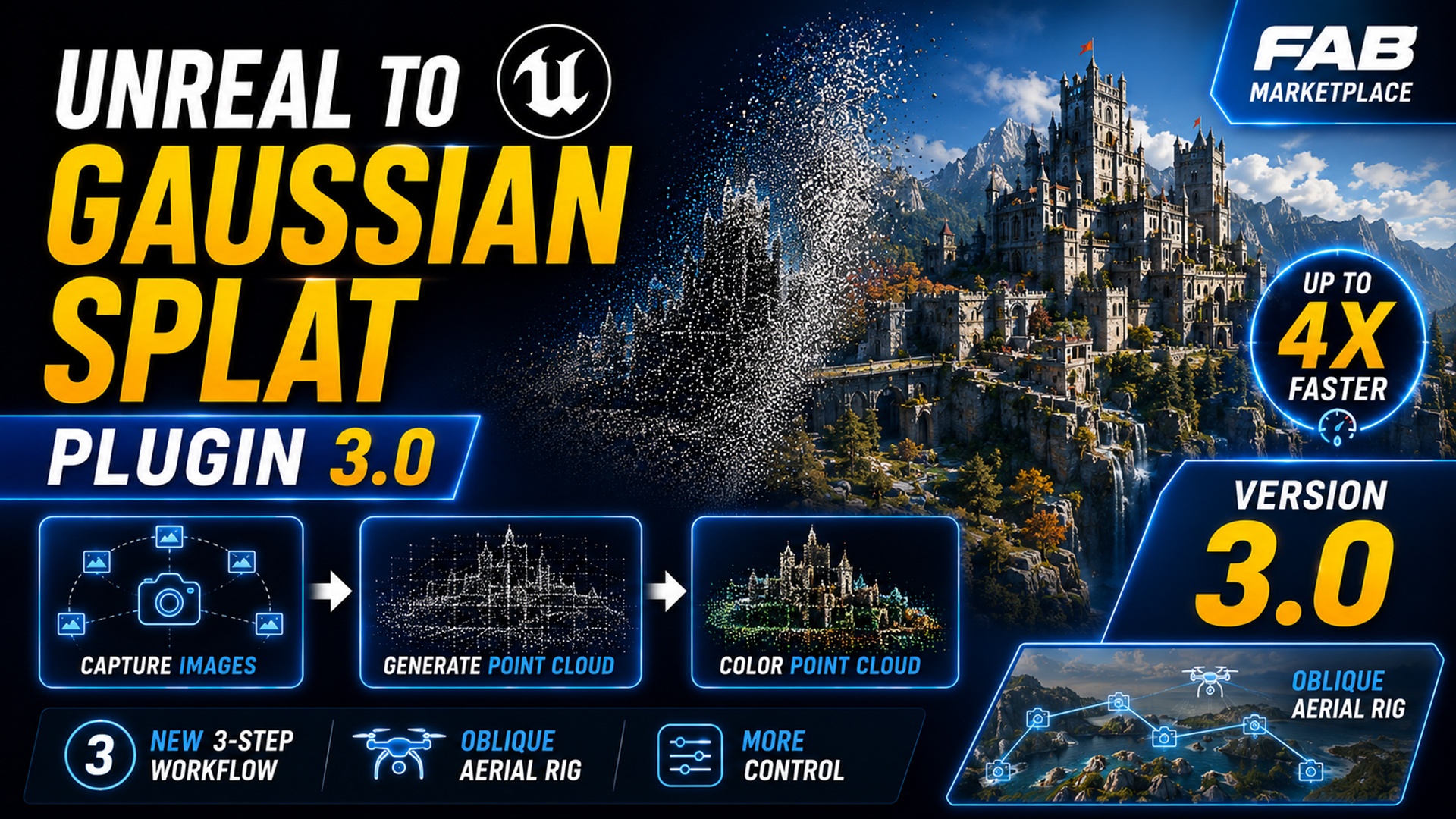
Unreal to Gaussian Splat plugin on Fab Marketplace
/ Companion workflow

Need to convert Unreal scenes into Gaussian splats?

Unreal To Gaussian Splat handles the capture workflow without manual setup.